Working with communities
A data center is a long-term neighbor. We start with the county’s rules and the people who live there, and we do that work in public.
We show up before anything gets built.
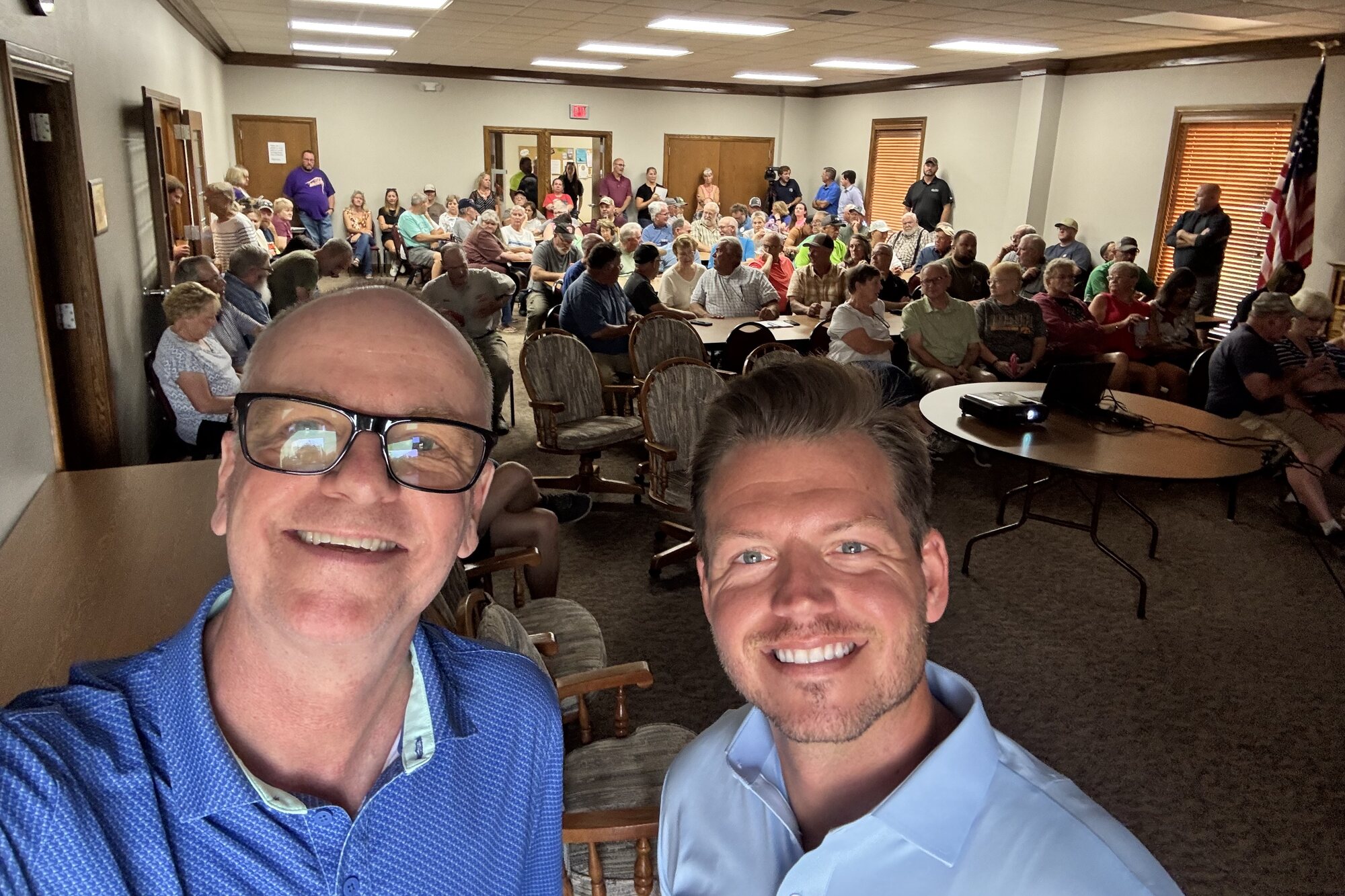
A data center changes a place for decades. The people who live there should hear the plan from us, in person, and be able to hold us to it.
When Ida County paused new data center projects this summer to write its own rules, it asked us to help. We drafted a framework and presented it to the Board of Supervisors on July 27. The County decides what stays in it.
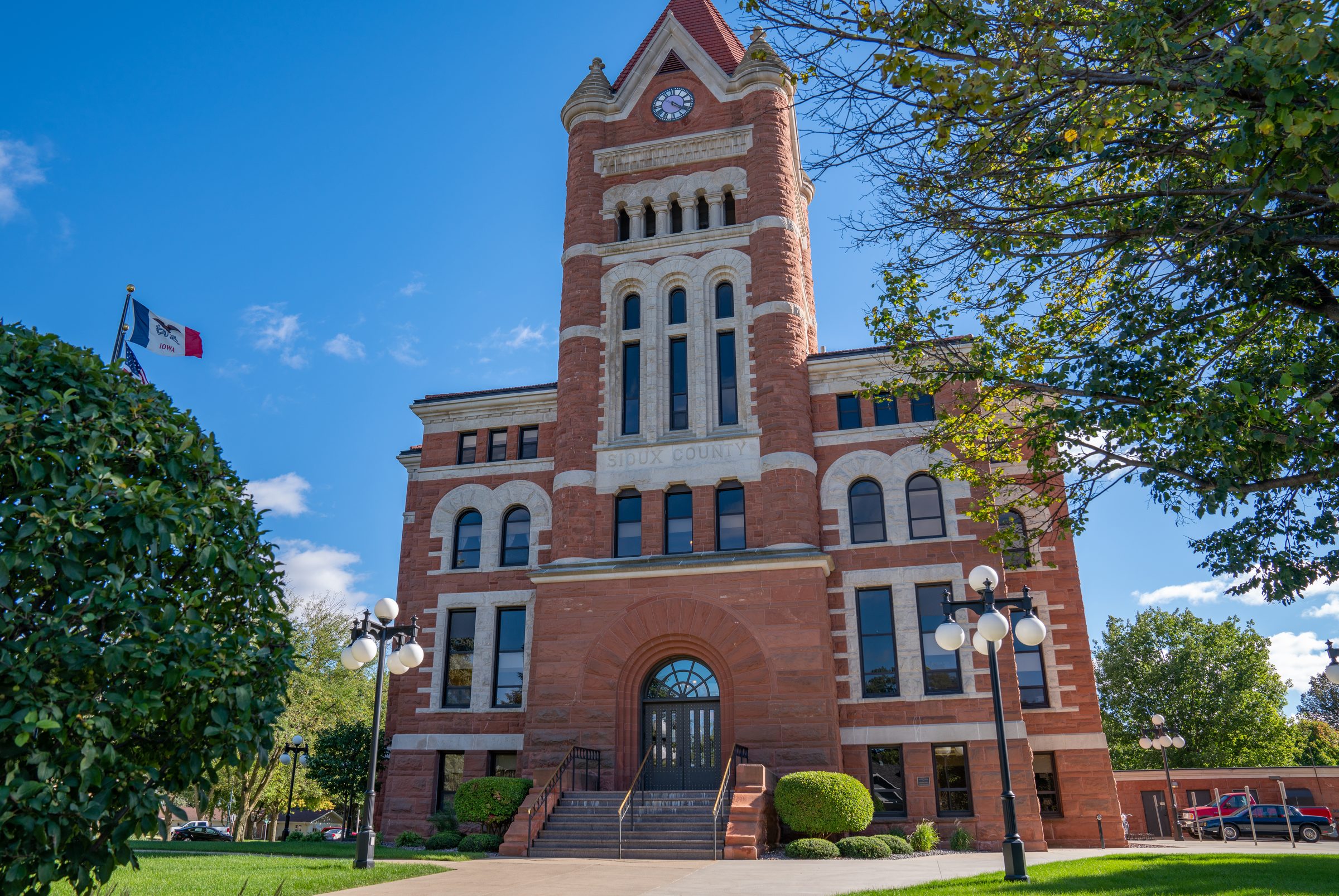
In August we held open meetings at the Sioux County Courthouse in Orange City and at the Ida Grove Community Recreation Center. Both rooms were full, and people came with hard questions about water, noise, roads, and power bills. We answered what we could that night, then followed up with an open house at the Sioux County site, evening webinars for each county, and second meetings in Arthur and Hull.
Everything we presented is published on a page for each county, with a way to ask what we didn’t cover. We also opened a Community Advisory Council, so local residents hear plans first and bring their neighbors’ concerns straight to us.
Where we’ve shown up
Eight public meetings in three counties since August, in person and online. What we presented in Sioux and Ida counties is published on a page for each, with a way to ask what we didn’t cover.
- Sioux County, Iowa
Three meetings
- Aug 10Orange CitySioux County Courthouse
- Aug 17OnlineEvening webinar
- Aug 25HullAmerican Reformed Church
- Ida County, Iowa
Four meetings
- Aug 11Ida GroveBoard of Supervisors
- Aug 11Ida GroveCommunity meeting
- Aug 17OnlineEvening webinar
- Aug 24ArthurCommunity Center
- Clay County, Iowa
One meeting
- Sep 29SpencerSupervisors and Zoning Board
What we heard
The questions that came up most at the meetings and through the county pages, with our answers today. The figures presented at each meeting are on that county’s page.
Will it use our water or affect our wells?
We design for minimal water use, through closed-loop systems and a partner’s patented cooling technology. The draft framework asks the County to require low-water closed-loop cooling and to make the developer fix or pay for any damage to nearby wells.
Will it raise my electric bill?
Electric rates are set by state regulators and your local utility, not by a developer. Before any project moves forward, we work with the utility to confirm the power is there and what serving the facility requires.
Will it be loud? What about the generators?
We design with sound barriers and careful equipment placement, and we support measurable noise limits written into the county’s rules, checked once the building is running. Generators are for backup when grid power is lost.
What happens to our roads during construction?
Haul routes, road protection, staging, and construction hours belong in the county’s rules. The draft framework asks that the developer pay for road damage and improvements.
Will it take productive farmland?
The draft framework asks the County to favor industrial ground and lower-quality farmland over productive acres.
How big could it get?
The phases we’ve presented have been about 10 MW each, roughly a 40,000 square foot building. How large a project can get is set in the county’s public process, under a limit the County writes into its own rules.
What does the county get in taxes?
New property tax revenue and business for local suppliers. We’ve asked for no local tax abatement. Details are shared per project, in public.
Will closed-loop cooling be committed in writing?
We’ve asked for it to be. The draft framework asks the County to require low-water closed-loop cooling by rule, which binds us and anyone who builds after us.
Will it light up the night?
Lighting belongs in the county’s rules. The draft framework asks for downward-shielded lighting and screened equipment, along with strict noise limits at nearby farms and homes.
What happens if it’s ever shut down?
The draft framework asks the developer to keep emergency and shutdown plans on file, and to set money aside up front to remove the facility if it is ever abandoned. Enforcement lasts for the life of the facility, not just at approval.
What happens to property values nearby?
We heard this question in both counties. We don’t have an answer we can stand behind yet, and we won’t guess.
Who will use the data center?
We can’t name an end user today, and we’d rather say that plainly than hint at one. Whoever eventually uses the facility, the county’s rules apply to the project.
What we put in writing
At our community meetings we handed out one page: the protections we’re asking each county to adopt, binding on us and on anyone who builds after us. Each county decides what it adopts.
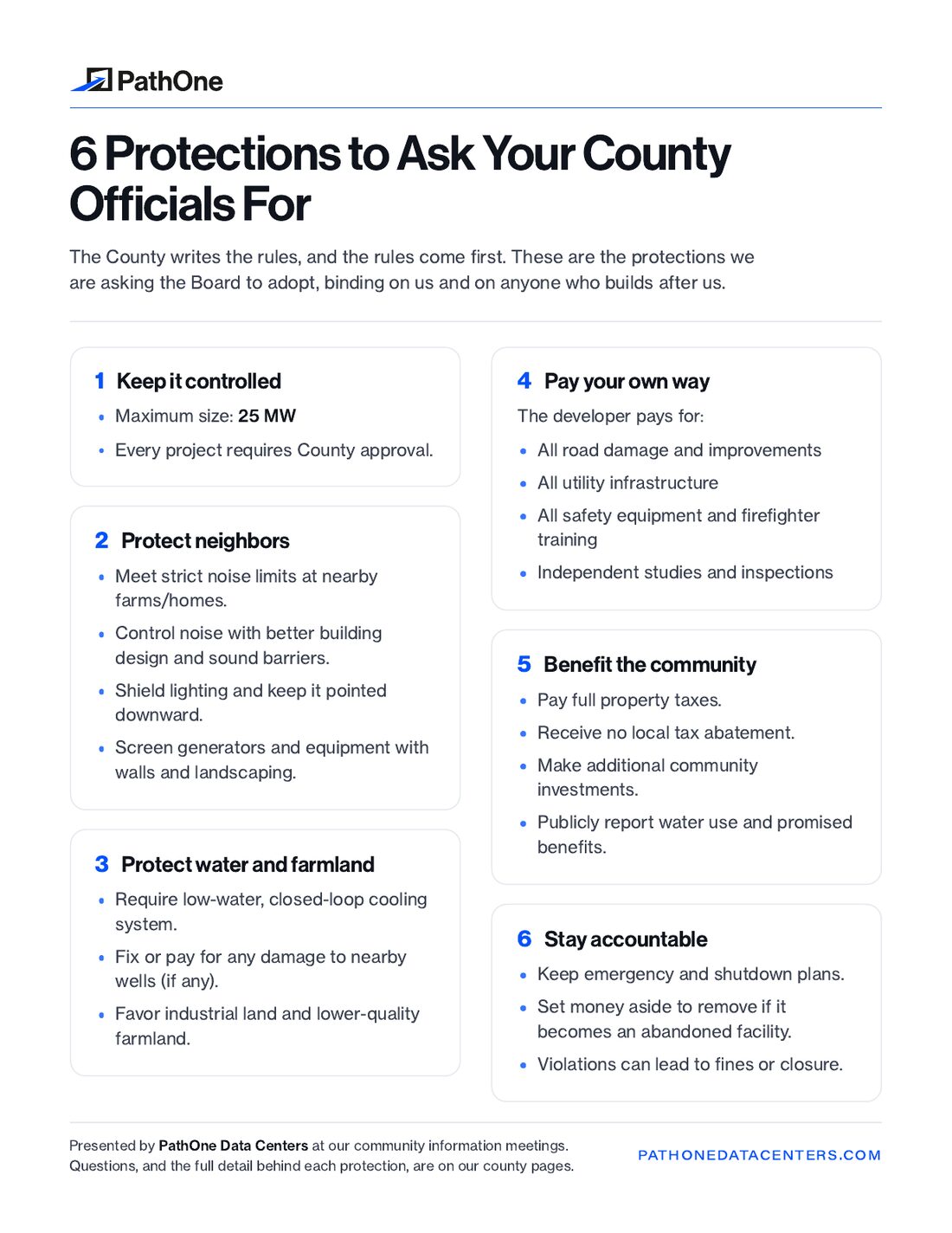
6 Protections to Ask Your County Officials For
- Keep it controlled
A size cap, and County approval for every project.
- Protect neighbors
Strict noise limits, shielded lighting, and screened equipment.
- Protect water and farmland
Low-water, closed-loop cooling, and fixing any damage to nearby wells.
- Pay your own way
Roads, utility infrastructure, safety equipment, and independent studies.
- Benefit the community
Full property taxes, with no local tax abatement.
- Stay accountable
Shutdown plans, and money set aside to remove the facility if it is abandoned.
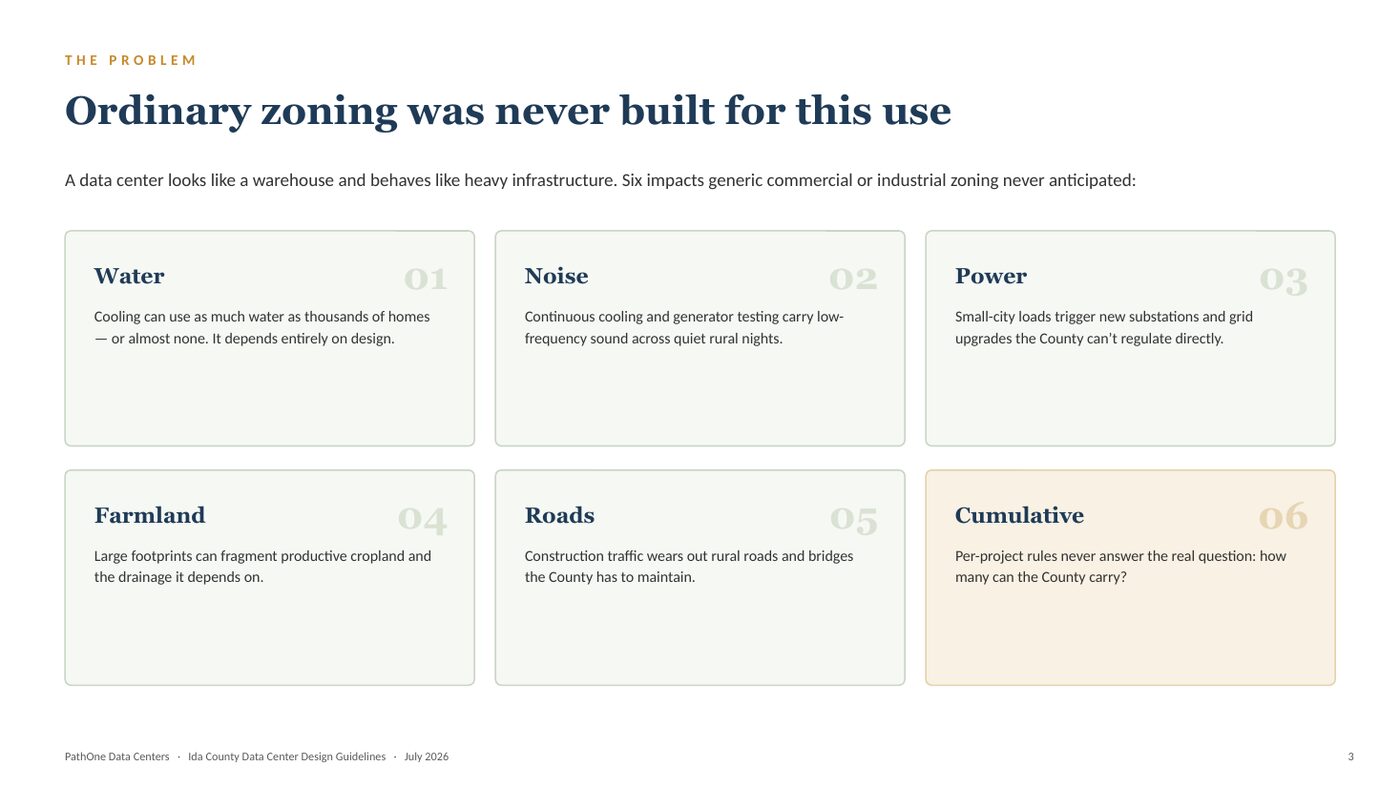
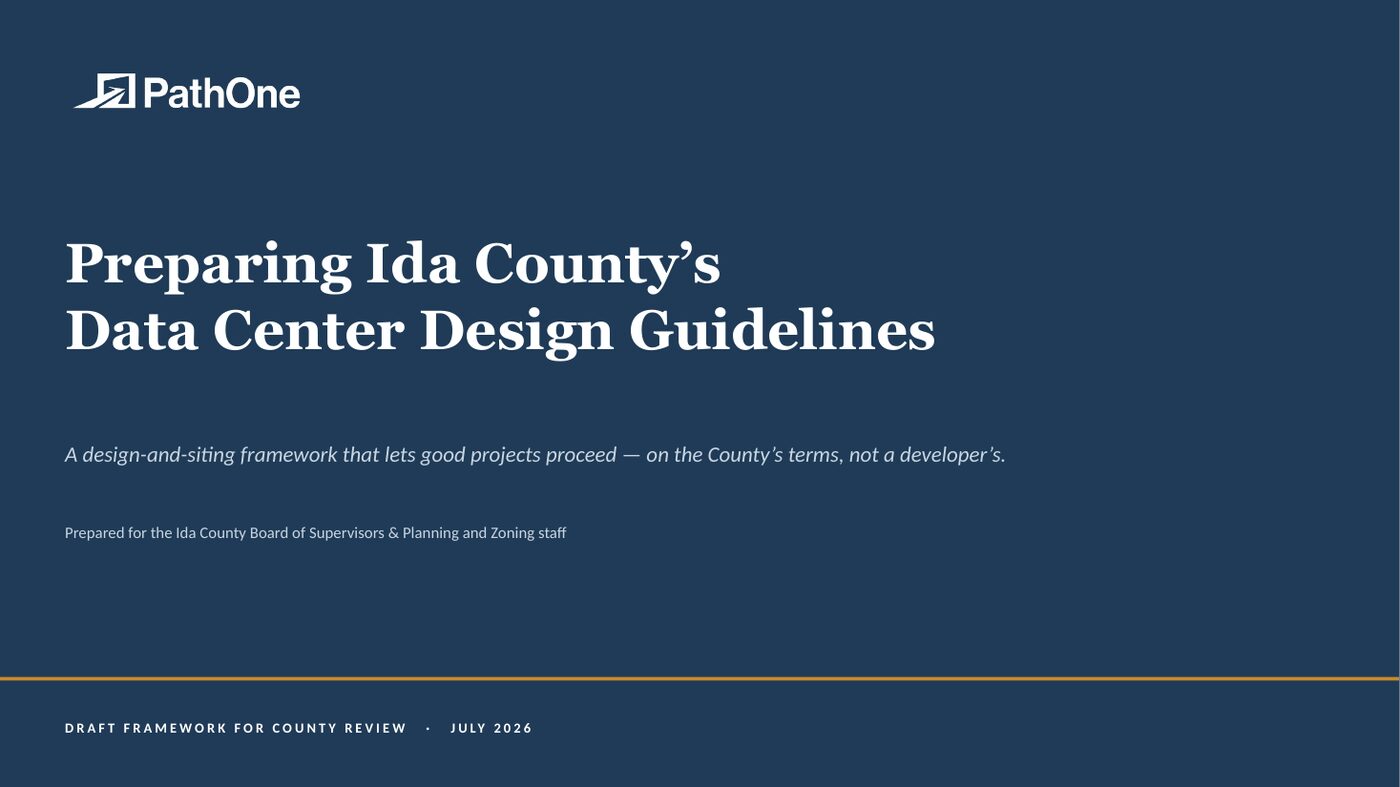
Ida County design guidelines
When Ida County paused new projects to write its own rules, this is the draft framework we prepared at the County’s request. It works through the six impacts ordinary zoning never anticipated: water, noise, power, farmland, roads, and how many projects a county can carry. The policy calls belong to the Board.
Sioux County: what we shared
What we presented on August 10, and a form for questions.
Data center ordinance template
A starting point any county can adapt with its own legal counsel. Word document.
“Developer hosts data center informational meeting”
N’West Iowa REVIEW, August 11, 2026. Coverage of the Orange City meeting.
Community Advisory Council
Local residents who hear project information first, ask the hard questions, and bring their neighbors’ concerns straight to us. It is not an approval board. The county holds every decision.
Talk with us about your county.
We’ll bring what we presented in Ida and Sioux counties, and answer questions in public.